Reading time: approximately 7 minutes
Reducing electricity consumption by 5.41% while keeping machinery productivity essentially unchanged. This is the result at the heart of a study conducted by the Smart Energy Lab of the University of Florence at Rosa Catene’s manufacturing plant in Calolziocorte (Lecco, Italy), where Energia Europa installed two EP-X devices. This scientific investigation demonstrates how, in the plant examined, industrial energy efficiency can translate into lower electricity consumption while maintaining the same amount of work performed.
Table of Contents
- Rosa Catene: two EP-X devices installed on production lines
- Energy savings and productivity: why both must be measured
- The scientific study conducted by Smart Energy Lab
- The results: 5.41% energy savings
- How EP-X improves industrial plant efficiency
- From energy audits to savings verification
- Energia Europa for industrial energy efficiency
Rosa Catene: two EP-X devices installed on production lines
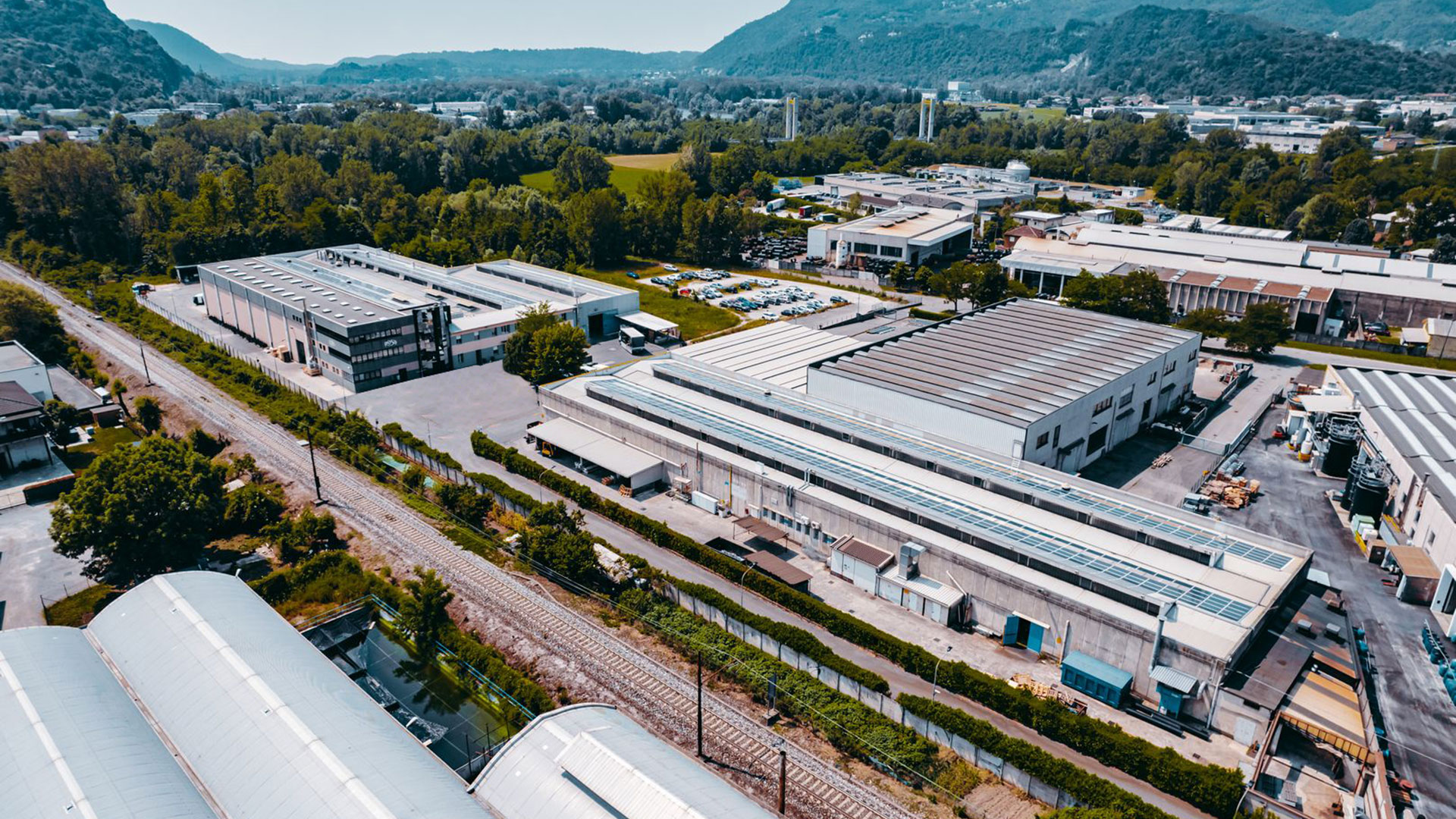
Rosa Catene is an Italian company specializing in the production of industrial roller chains, based in Calolziocorte, in the province of Lecco. Its manufacturing facility operates different types of machinery, including automatic presses, bending machines, machining centers and pre-assembly systems.
In this type of manufacturing environment, electricity powers production processes that require operational continuity and precision. Improving plant efficiency therefore means identifying opportunities to reduce energy consumption without compromising production line performance.
In 2023, Energia Europa installed two EP-X devices, rated at 500 A and 800 A respectively, on two separate production lines at Rosa Catene.
The project is part of Energia Europa’s activities dedicated to Power Quality and the energy efficiency of industrial electrical systems. EP-X is designed to improve electrical supply conditions, helping to reduce losses and disturbances within the installation.
A previous measurement campaign, carried out according to the IMQ_REE_D01_R00 protocol validated by IMQ, had already measured a 5.41% improvement in electrical energy efficiency.
The customer subsequently requested a scientific investigation to verify that the measured savings were not associated with a reduction in machinery performance.
The objective was to demonstrate that the intervention had improved the plant’s energy efficiency while maintaining essentially the same production output.
Rosa Catene’s experience adds to other industrial applications of EP-X documented by Energia Europa. One example is the SANHA plant in Belgium, where the device achieved a measured 5.2% reduction in electricity consumption. Discover the SANHA case study and the results achieved with EP-X.
Energy savings and productivity: why both must be measured
When evaluating an industrial energy-saving project, reducing electricity consumption represents only one part of the result.
A machine that produces fewer parts, operates more slowly or reduces its activity may consume less electricity without necessarily becoming more efficient.
Measuring genuine energy efficiency therefore requires considering the useful work actually performed by the equipment.
The principle is straightforward: reduce the kWh required to achieve the same production output.
In the Rosa Catene case, this verification was particularly important because EP-X, when operating in Saving mode, also affects the supply voltage conditions. In the installation examined, a voltage drop of up to approximately 14 V was recorded.
This raised a specific technical question: could the voltage variation slow down the machinery and therefore account, at least in part, for the measured energy savings?
To answer this question, it was necessary to measure machinery productivity directly, comparing results with EP-X operating in Saving and Bypass modes.
This is particularly important for manufacturing companies, where reducing energy costs must remain compatible with production targets. Energia Europa also addresses this topic in a guide dedicated to energy-saving strategies for existing industrial facilities. Learn how to reduce energy consumption without stopping production.
The scientific study conducted by Smart Energy Lab
To investigate the results achieved at Rosa Catene, an in-depth scientific study was conducted at the end of 2024 by Smart Energy Lab, a joint laboratory of the University of Florence.
The research was carried out under the scientific supervision of Prof. Eng. Francesco Grasso, a professor at the Department of Information Engineering of the University of Florence and Scientific Director of Smart Energy Lab.
The aim was to compare machinery productivity directly under two different EP-X operating conditions:
- Saving mode: EP-X is active and operates within the electrical installation.
- Bypass mode: EP-X is bypassed through its dedicated bypass system, allowing the performance of the loads to be compared under the two operating conditions.
The study involved 14 measurements across 13 industrial machines and one LED lighting system.
For production machinery, the researchers analyzed indicators such as the number of parts manufactured, cycle times and rotational speeds. For the lighting system, light output was assessed.
Video recordings were analyzed frame by frame at a frequency of 30 fps, providing a temporal resolution of approximately 33 milliseconds.
The complete 42-page technical report documents the recordings, processing times, cycle calculations and productivity indicators used for each test.
This approach made it possible to examine the actual behavior of the machinery, connecting the electrical operating conditions of the plant with production performance.
The study therefore went beyond simply observing a reduction in energy consumption. It investigated whether the equipment continued to perform essentially the same amount of work under both operating conditions.
Would you like to take a closer look at the electrical conditions of your facility?
Energia Europa can help you identify potential opportunities for improvement through a technical assessment of your electrical system. Call +39 0445 510 156 or fill out the contact form to speak with our team.
The results: 5.41% energy savings without significant reductions in production
The measurements conducted by Smart Energy Lab showed that productivity remained essentially unchanged between the two EP-X operating modes.
The starting point was the 5.41% improvement in electrical energy efficiency recorded during the previous measurement campaign.
The subsequent study verified that productivity variations in the individual tests ranged from 0% to 0.39%.
More specifically, seven measurements showed no variation, while three additional measurements recorded negligible differences or values close to the resolution of the measuring instruments.
The remaining variations, reaching a maximum of 0.39%, were considered too small to support a correlation between the measured energy savings and any reduction in production capacity.
Selected measurements from the Rosa Catene plant
| Machine | Saving Mode | Bypass Mode | Result |
|---|---|---|---|
| Automatic press AL19, 50 pieces | 80.500 s | 80.483 s | 0.02% difference |
| Sinico MA0295 machining center, 4 pieces | 51.333 s | 51.333 s | No variation |
| Pre-assembly R4 1129, 25 pieces | 61.000 s | 61.033 s | Slightly faster in Saving mode |
| Bending machine M407, 50 pieces | 47.533 s | 47.467 s | 0.14% difference |
One particularly significant result concerns the Sinico MA0295 machining center: the time required to produce four pieces was identical in both operating modes.
The AL19 automatic press and the M407 bending machine also recorded negligible differences in cycle times.
For the LED lighting system, the study measured an average illuminance of 362.8 lux in Saving mode, compared with 360.3 lux in Bypass mode, showing no reduction in lighting performance.
What do these results demonstrate?
The study concluded that, under the conditions examined, EP-X operation did not cause detectable changes in production capacity.
The measured reduction in electricity consumption therefore cannot be explained by machinery slowing down in proportion to the energy savings.
For Energia Europa, this represents important scientific evidence: the energy efficiency achieved with EP-X was also verified against the useful work actually performed by the equipment.
For the installation examined, the results confirm that it is possible to use less electricity while maintaining essentially the same production output.
EP-X performance may naturally vary depending on electrical network configuration and operating conditions. The results achieved at Rosa Catene should therefore not be considered automatically replicable in every industrial facility.
Another application of this technology is documented in the GAPI Group case study, where Energia Europa installed EP-X devices to improve power supply quality and reduce electricity consumption across several production facilities. Read the GAPI Group case study and discover the results achieved with EP-X.
How EP-X improves industrial plant efficiency
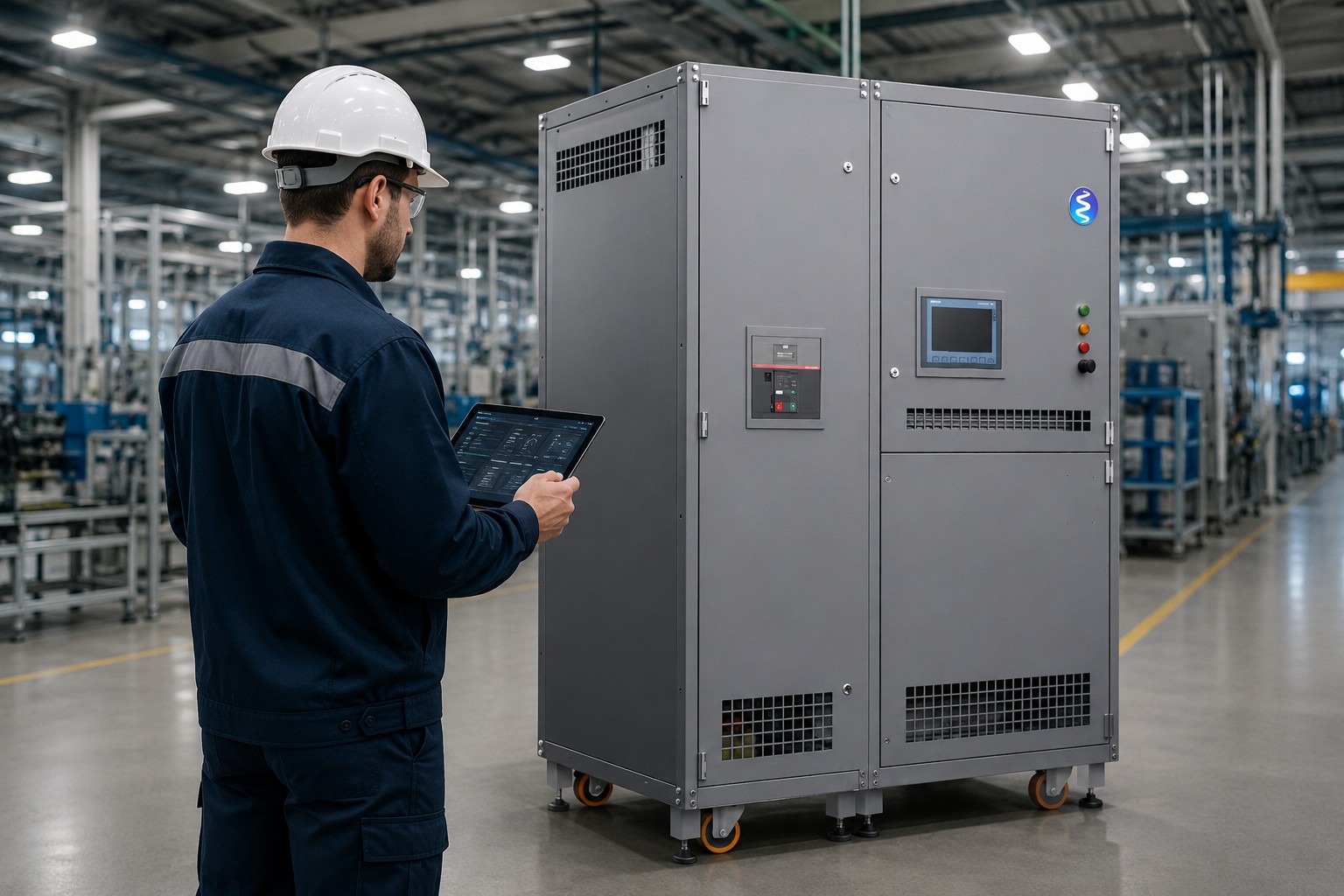
The EP-X device by Energia Europa is a patented system designed to improve electrical energy efficiency by reducing losses and disturbances within the network.
Based on series passive inductive filter technology, the device is installed between the transformer and the loads supplied by the electrical system.
EP-X acts on power supply conditions and the current waveform, helping to improve the quality of electricity distributed to the equipment.
The principle behind this technology is to reduce the amount of energy required to power the loads while maintaining the useful work performed by the plant.
The role of the bypass system in measuring energy savings
One of the key features of EP-X is its patented bypass system, which allows the electrical performance of the plant to be compared in Saving and Bypass modes.
This comparison makes it possible to measure the effect of the device without interrupting the power supply to the loads.
Using the measurement protocol validated by IMQ, Energia Europa can quantify the energy efficiency improvement achieved through EP-X technology.
The Smart Energy Lab research conducted at Rosa Catene added a further level of verification to this methodology by comparing the actual performance of the machinery.
It is precisely this combination of energy measurements and production data that makes the case particularly relevant.
The 5.41% energy saving takes on a more complete technical significance when it is demonstrated that it does not correspond to a significant reduction in production capacity.
EP-X addresses inefficiencies within the electrical network, but the achievable benefit depends on the characteristics of each installation. To understand which electrical phenomena may increase consumption and how they can be addressed, read Energia Europa’s guide on how to reduce network losses.
From energy audits to savings verification
The Rosa Catene case highlights the value of a data-driven approach to industrial energy efficiency.
Before identifying a possible intervention, it is essential to understand the characteristics of the electrical network, the behavior of the loads and the operating conditions of the facility.
Energia Europa supports companies in assessing Power Quality issues and identifying the technologies best suited to their electrical systems.
The process can begin with an energy audit and continue with specific investigations of the electrical network to identify losses, disturbances or supply conditions that affect efficiency.
Based on the measurements collected, it is possible to assess the suitability of EP-X and determine the appropriate configuration for the installation.
The verification stage is equally important. By comparing operating conditions, Energia Europa can measure the effect produced by the device.
The study conducted at Rosa Catene represents a further development of this approach, as it also verified that production performance remained essentially unchanged.
It is important to distinguish between a comprehensive organizational energy audit and the specific measurements used to assess Power Quality and electrical energy efficiency. These activities serve different purposes, but they can contribute to the same improvement process.
Would you like to identify energy efficiency opportunities at your facility?
Rely on Energia Europa’s expertise to evaluate the most suitable solutions for your electrical system. Call +39 0445 510 156 or request a consultation through the contact form.
To learn more about the initial assessment of energy consumption and operating conditions in an industrial facility, read Energia Europa’s guide to energy audits.
Energia Europa for industrial energy efficiency
The Rosa Catene project represents a particularly significant case study for Energia Europa because it combines measured energy savings with an independent scientific assessment of production performance.
The research conducted by Smart Energy Lab at the University of Florence showed that the reduction in electricity consumption achieved with EP-X was not correlated with a significant decrease in the work performed by the machines analyzed.
This result confirms the importance of evaluating energy efficiency as the relationship between the energy used and the work actually performed.
For manufacturing companies, this means being able to consider interventions designed to improve electrical system efficiency without compromising production targets.
Energia Europa provides businesses with technical expertise, measurement systems and patented technologies to identify inefficiencies within their electrical installations and verify the reductions achieved.
The Rosa Catene case demonstrates the value of this approach: not simply consuming less electricity, but verifying that the same amount of work has been performed using less energy.
Would you like to improve your facility’s energy efficiency?
Energia Europa can support your company in analyzing its electrical network, identifying potential energy-saving opportunities and evaluating the solutions best suited to your facility.
Call +39 0445 510 156 or fill out the contact form to request further information and speak with our technical team.